
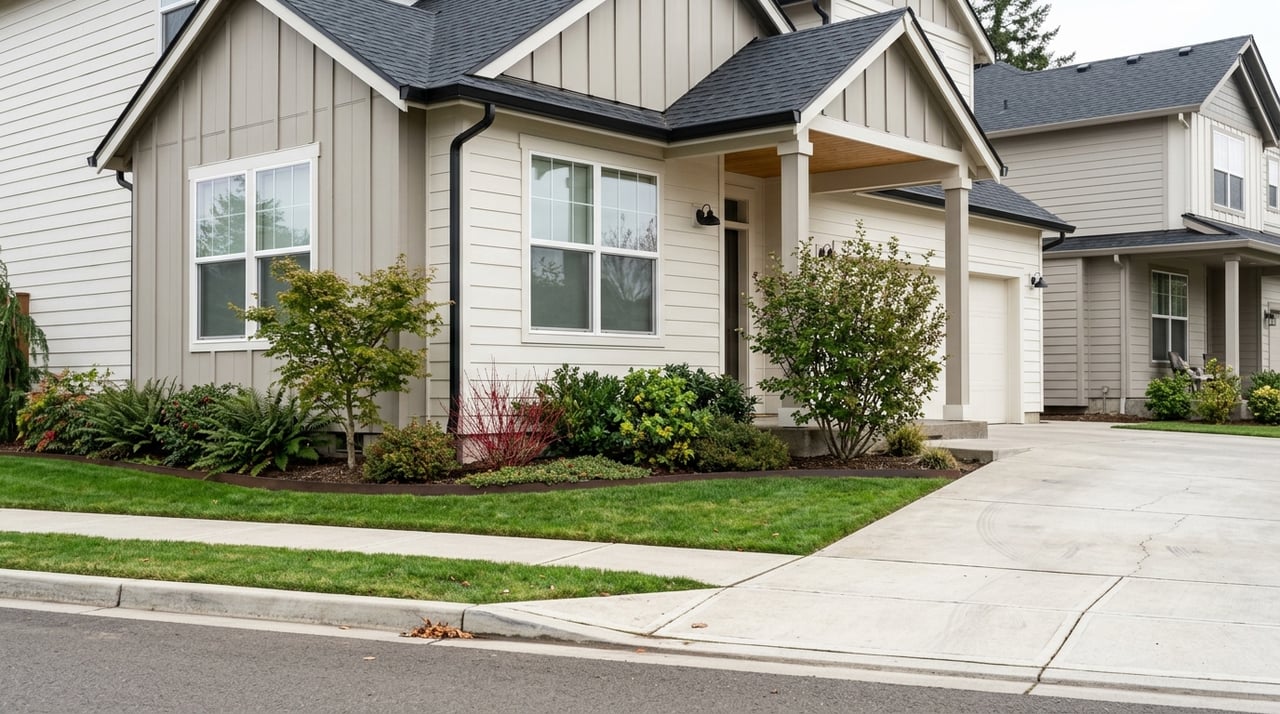
If you’re searching for a newer neighborhood in Ridgefield, you’ve probably noticed something fast: there is no one-size-fits-all “master-planned community” here. Instead, Ridgefield offers several newer HOA-based neighborhoods, each with its own layout, builder style, amenities, and stage of growth. If you want to understand how these communities compare, what daily life may feel like, and what to watch for before you buy, you’re in the right place. Let’s dive in.
What master-planned means in Ridgefield
In Ridgefield, “master-planned” often means a neighborhood that was developed in phases with shared amenities, common-area maintenance, and a broader city vision behind it. The city’s comprehensive plan points to long-term growth that emphasizes quality neighborhoods, parks, pedestrian access, mixed-use areas, and protection of natural amenities.
That matters because Ridgefield’s newer-home landscape is not centered on just one major development. City reports show multiple subdivisions moving forward at once, including Greely Farms, Paradise Pointe, Ridgefield Heights, Seven Wells, Quail Ridge, Sanderling Park, Meadowview, and Taverner Ridge. For you as a buyer, that usually means comparing several active or recently active neighborhoods instead of focusing on a single flagship community.
Ridgefield’s growth pattern
Ridgefield has been planning for significant population growth, from about 7,000 residents in 2016 to more than 26,000 by 2035. That helps explain why you see so many newer neighborhoods with trails, green spaces, and HOA-maintained common areas.
It also helps explain why some communities feel established while others still feel like they are taking shape. In Ridgefield, a “master-planned” setting can range from a smaller finished enclave to a larger area that is still adding new phases, parks, or nearby commercial services.
Common features in newer Ridgefield communities
Many of Ridgefield’s newer neighborhoods share a few patterns that are helpful to understand before you tour homes.
HOAs are common
The city states that most neighborhoods have HOAs, and new subdivisions are required to have one. Dues typically help maintain common areas such as walking paths, parks, greenbelts, and similar shared features.
For many buyers, that makes HOA fees easier to evaluate. In Ridgefield, those dues often support visible amenities you may use every day rather than minimal upkeep alone.
Trails and parks shape daily life
Ridgefield has built an interconnected parks and trail identity that shows up inside and around many neighborhoods. The city highlights trail segments tied to subdivisions across town, including Discovery Ridge Trail, Teal Crest subdivision trail, Canyon View trail, Clover Hill trail, and loops behind Heron Ridge and Bellwood Heights.
This creates a different feel from older neighborhoods that may have fewer planned common spaces. If you value walking paths, greenbelts, and outdoor access near home, newer Ridgefield communities often lean into that lifestyle.
Many neighborhoods are still evolving
Some communities are mostly built out, while others still have active phases or nearby projects under development. That can affect everything from traffic patterns to the feel of the streetscape to how much nearby retail is already in place.
If you like the energy of a growing area, that can be a plus. If you prefer a more settled environment, it is worth asking which phases are complete and what is still planned nearby.
Guide to major Ridgefield communities
Greely Farms
Greely Farms is one of Ridgefield’s largest newer neighborhoods. Builder information describes it as a community of more than 500 homes with 8 acres of green space, parks, a playground, paved nature trails, picnic and grilling areas, and a dog-friendly layout.
Homes here are currently listed by the builder starting in the low $500,000s, with open floor plans and modern finishes. If you want a larger neighborhood with built-in outdoor amenities and a clear community identity, Greely Farms is often one of the first places buyers explore.
Best fit for
- Buyers who want a large planned neighborhood
- Households looking for trails, parks, and shared outdoor space
- Buyers focused on newer construction and modern layouts
Paradise Pointe
Paradise Pointe sits on Ridgefield’s north side and offers a different kind of appeal. Builder information highlights spacious lots, direct walking-trail access, and floor plans that include single-level and primary-on-main living.
Lot sizes are described at roughly 7,500 to 9,500 square feet, with homes ranging from about 1,912 to 3,967 square feet and generally three to five bedrooms. The city has also announced a 15-acre park under development within Paradise Pointe, which suggests this community is still growing and may continue to add value through future amenities.
Best fit for
- Buyers who want larger lots
- Those looking for single-level or primary-on-main options
- Buyers comfortable with a neighborhood that is still evolving
Ridgefield Heights
Ridgefield Heights is located west of I-5 and south of Pioneer Street, which makes it one of the more commuter-oriented newer neighborhoods in town. Builder materials describe single- and two-story homes, including Next Gen designs, generally ranging from about 1,711 to 3,442 square feet with three to five bedrooms.
Community amenities include a basketball court, playground, picnic shelter, pathways, greenbelt areas, and trail elements. If your routine includes frequent travel toward Vancouver, Portland, or nearby work centers, Ridgefield Heights may stand out for its location as much as its homes.
Best fit for
- Buyers who want easier I-5 access
- Households looking for a range of floor plans
- Buyers who value neighborhood amenities without being far from daily commuting routes
Seven Wells and The Reserve at Seven Wells
Seven Wells is another active HOA neighborhood cluster in Ridgefield, and city permit reports show both Seven Wells and The Reserve at Seven Wells as active phases. The Reserve is described by the builder as a gated community with single-level and primary-on-main options.
Homesites range from about 4,200 to 11,000 square feet, with plan sizes roughly from 2,527 to 3,650 square feet. Builder information also notes nearby essentials such as Rosauers Supermarket and Taps Beer Reserve, which gives this area a blend of residential privacy and everyday convenience.
Best fit for
- Buyers looking for gated-community privacy
- Those seeking larger floor plans
- Buyers who want nearby shopping and services without giving up a neighborhood setting
Discovery Ridge and Royle-Pioneer Crossing
Discovery Ridge is best understood as part of a larger growth corridor rather than a stand-alone amenity community. The city says the Royle and Pioneer Crossing area sits between downtown Ridgefield and the I-5 junction and is planned as a walkable, multimodal transition zone.
As development continues, the area is expected to gain a more complete street grid and recreation trail system. The Discovery Ridge Trail itself is a 0.69-mile route along a habitat buffer, with birdwatching and wildlife viewing as notable features.
Best fit for
- Buyers interested in an area with future growth potential
- Those who like access between downtown and I-5
- Buyers who appreciate trails and natural buffers near residential areas
Quail Ridge
Quail Ridge represents a higher-end option in Ridgefield’s newer-home mix. Builder information describes a 27-home community with one- and two-story designs ranging from about 2,790 to 3,618 square feet, generally with four to five bedrooms, three-car garages, and more personalized design options.
The location is described as adjacent to Windy Hills Winery and close to downtown Ridgefield, with convenient access to Vancouver, Portland, and Portland International Airport. If you are shopping for a luxury-leaning new construction home, Quail Ridge may deserve a closer look.
Best fit for
- Buyers seeking larger luxury-oriented homes
- Those who want proximity to downtown Ridgefield with regional access
- Buyers looking for a smaller, more limited community setting
Other active neighborhoods to watch
City development reports also show active or recently active phases in Taverner Ridge, Sanderling Park, Meadowview, and Quail Ridge. Even if these are not the first names you hear, they matter because they reflect how spread out Ridgefield’s growth really is.
That wider mix can give you more options across price points, lot sizes, and neighborhood character. It can also make local guidance especially useful when you are trying to compare communities that may be at different stages of development.
Newer neighborhoods versus downtown Ridgefield
One of the most useful ways to think about Ridgefield is to compare its newer subdivisions with the older downtown core. They offer different advantages, and neither is automatically better. It depends on how you want to live.
Newer communities often offer
- Larger new-construction floor plans
- HOA-maintained common areas
- Planned trails, parks, and green spaces
- A more suburban, phased-neighborhood layout
Downtown Ridgefield often offers
- A more compact local experience
- Access to shops, restaurants, and civic buildings
- Proximity to Overlook Park and community events
- A more mixed-use, established setting
The city notes that Overlook Park anchors recurring events such as the farmers market and First Saturdays. That helps explain why downtown often feels more civic and event-centered, while many newer communities feel more residential and amenity-driven.
Shopping, services, and getting around
Most newer Ridgefield communities are not built around all-in walkability, but they do benefit from access to strong local service areas. Downtown remains the most compact and local-feeling district, while Pioneer Street and SR 501 connect downtown to the I-5 junction.
The Union Ridge Town Center area near that junction is also becoming a more important retail node. In practical terms, many newer neighborhoods are positioned to give you relatively quick access to both Ridgefield essentials and the larger Vancouver-Portland employment and shopping corridor.
Transit options exist, though Ridgefield still follows a mostly car-first pattern. The city says the C-TRAN Connector provides dial-a-ride and scheduled-stop service at Ridgefield City Center, Route 48 serves several key stops including Junction Park & Ride, and The Current on-demand service covers Ridgefield and La Center with connections to Junction Park & Ride.
What to ask before buying
When you tour master-planned or newer communities in Ridgefield, a few questions can help you compare options more clearly.
Ask about the neighborhood stage
Is the community mostly complete, or are there several phases still to come? This can shape your short-term experience and your understanding of what the area may look like in the next few years.
Ask what the HOA covers
Because HOAs are common in Ridgefield, it helps to know exactly what dues support. You may find that paths, parks, greenbelts, and shared landscape maintenance are central to the neighborhood’s appeal.
Ask how the location fits your routine
Some communities are better positioned for I-5 access, while others may feel more tucked away or closer to downtown. Your ideal choice may depend less on the model home and more on how the location supports your daily habits.
Ask about nearby amenities
A neighborhood may already have mature parks and services in place, or it may still be adding them. That distinction can make a real difference in how the community feels when you move in.
How to choose the right Ridgefield community
The best Ridgefield master-planned community for you depends on what matters most in your day-to-day life. You may want commuter convenience, larger lots, single-level living, luxury finishes, gated privacy, or easy trail access.
That is why local context matters so much here. Ridgefield is not just growing fast. It is growing in multiple directions at once, through neighborhoods that offer different lifestyles even when they are only a few minutes apart.
If you want help comparing Ridgefield communities, planning a move, or finding the right fit for your timeline, the team at Myra Brock - Main Site is here to offer relationship-first guidance with local insight every step of the way.
FAQs
What is a master-planned community in Ridgefield, WA?
- In Ridgefield, it usually means a newer neighborhood developed in phases with HOA-managed common areas, shared amenities, and a layout shaped by the city’s broader growth plan.
Do most newer Ridgefield neighborhoods have HOAs?
- Yes. The city states that most neighborhoods have HOAs, and new subdivisions are required to have one, often to maintain shared spaces like paths, parks, and greenbelts.
Which Ridgefield communities offer trails and parks?
- Several newer communities connect to Ridgefield’s broader trail and park system, and neighborhoods such as Greely Farms, Ridgefield Heights, Paradise Pointe, and areas near Discovery Ridge emphasize outdoor access.
Which Ridgefield community is best for commuting?
- Ridgefield Heights is often noted as one of the more commuter-friendly newer neighborhoods because it sits west of I-5 and south of Pioneer Street.
Are Ridgefield master-planned communities still being built?
- Many are. City reports show multiple active or recently active phases across neighborhoods such as Seven Wells, Paradise Pointe, Meadowview, Sanderling Park, Taverner Ridge, and others.
Is downtown Ridgefield different from newer neighborhoods?
- Yes. Downtown Ridgefield tends to feel more walkable, civic, and event-centered, while newer neighborhoods often focus more on larger homes, HOA amenities, trails, and planned green space.
